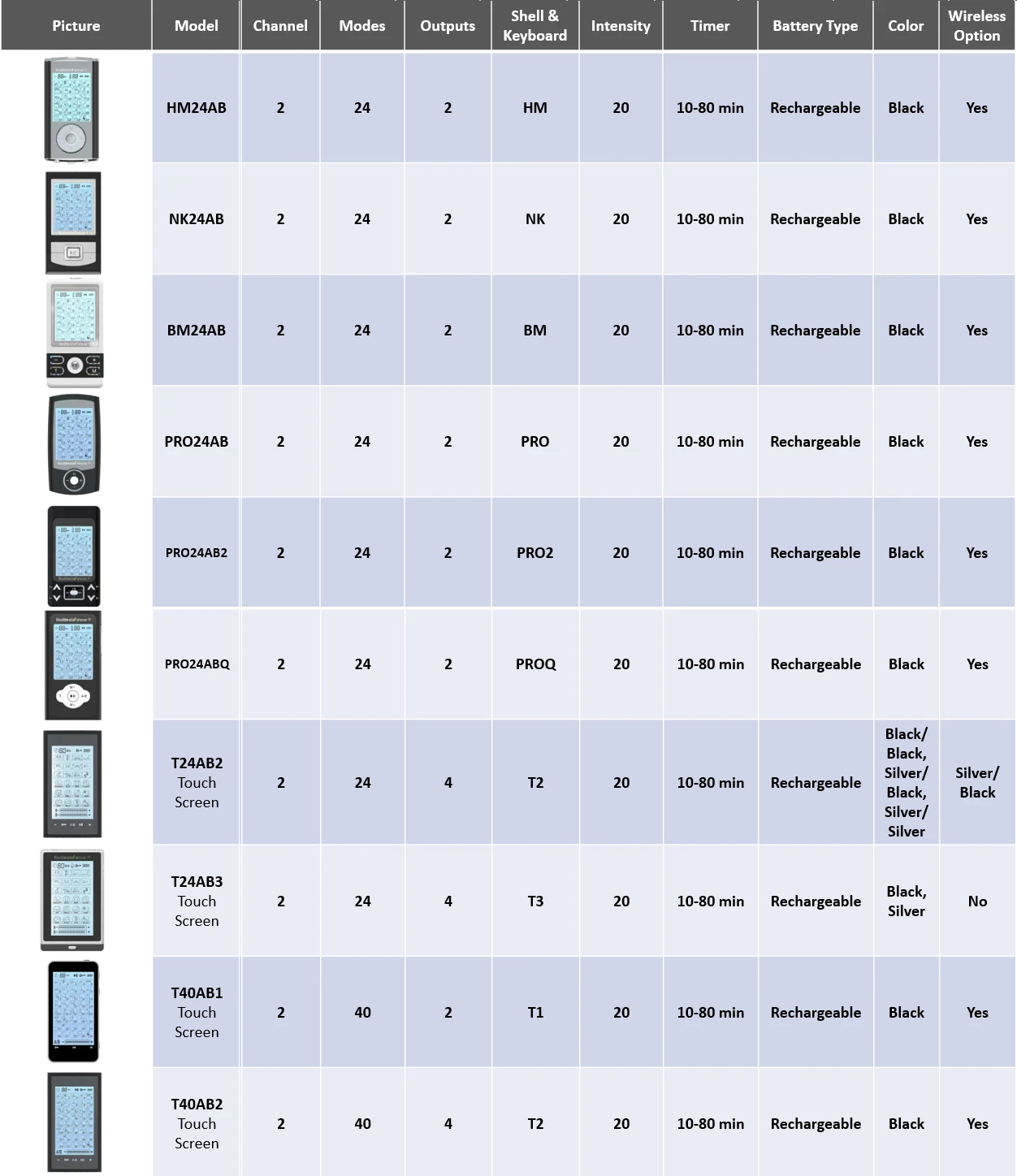
Acupuncture is one of the best-known therapeutic practices rooted in Traditional Chinese Medicine (TCM). It has evolved and developed over thousands of years and includes a variety of techniques designed to stimulate specific points, known as acupoints, on the human body for different therapeutic purposes.
The term “acupuncture” most commonly refers to the technique that is most widely practiced and studied scientifically: the insertion of thin, solid metal needles through the skin at specific acupoints.
The purpose of needling is to stimulate selected acupoints based on traditional TCM principles, with the goal of supporting desired health benefits or therapeutic outcomes.
HealthmateForever®/iSelfCare® technology is inspired in part by traditional therapeutic concepts and stimulation techniques associated with TCM, while using modern electrical stimulation technology rather than acupuncture needles.
Acupuncture
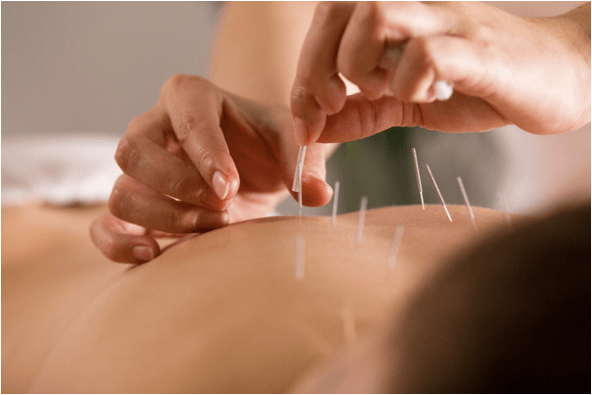
Acupuncture is one of the best-known practices rooted in Traditional Chinese Medicine (TCM). TCM has evolved over thousands of years and includes a variety of traditional approaches, including acupuncture, that use specific points on the body for different therapeutic purposes.
The term “acupuncture” most commonly refers to the insertion of thin, solid needles through the skin at specific points, known as acupoints. Acupuncture has been studied scientifically for a variety of conditions, particularly pain. Research suggests that acupuncture may help relieve certain types of pain, including some back, neck, and osteoarthritis pain, although the strength of evidence varies depending on the condition.
Research into how acupuncture works is ongoing. Studies suggest that acupuncture may affect the nervous system and other body tissues, and may influence the body's natural pain-processing mechanisms. However, the precise mechanisms are not fully understood, and some of the observed benefits may be related to nonspecific effects such as expectations and other aspects of treatment.
HealthmateForever®/iSelfCare® and TCM-Inspired Stimulation
HealthmateForever®/iSelfCare® technology is inspired in part by traditional stimulation concepts associated with TCM and acupuncture, including the use of selected points on the body.
However, HealthmateForever®/iSelfCare® electrical stimulation is not acupuncture and does not use acupuncture needles. Our devices use electrical stimulation delivered through electrode pads placed on the skin.
The fact that acupuncture has been studied for certain health conditions does not mean that HealthmateForever®/iSelfCare® devices have been clinically proven to provide the same effects as acupuncture. Any specific medical or therapeutic claim for a HealthmateForever®/iSelfCare® device should be based on the indications and evidence applicable to that specific device.
Our TCM-related information is provided to explain the traditional concepts that inspired certain aspects of our technology and is not intended to represent that our devices reproduce, replace, or are equivalent to traditional acupuncture treatment.
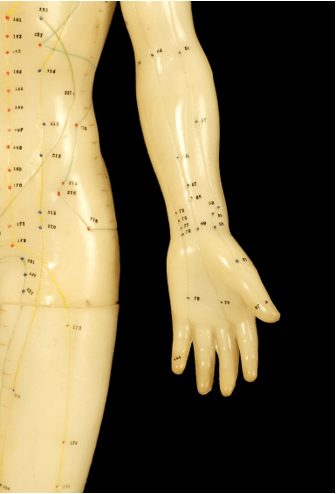
There are numerous acupoints located on the body. According to Schoenbart & Shefi (2014), The acupoint system has been developed based on the theory of meridians, which concluded that there are twelve regular meridians correspond to each of the six yin and six yang organs and also eight extra medians. For improvements in the health conditions of a particular organ or body part, the acupoints found along the corresponding meridian are often treated with acupuncture procedure. (Schoenbart & Shefi. 2014. Traditional Chinese Medicine Acupuncture)
Acupuncture points
From Acupuncture to TENS
Acupuncture and Pain Management
From Acupuncture to TENS
Acupuncture and Pain Management
Among the many traditional applications of acupuncture, pain management has been one of the most widely studied areas. Acupuncture has been investigated for various types of pain, and research suggests that it may provide pain relief for certain conditions. However, the strength of the evidence varies depending on the type of pain and the specific clinical situation.
Scientific research has also advanced our understanding of the potential neurobiological mechanisms associated with acupuncture. Studies suggest that acupuncture may influence the nervous system and the body's natural pain-processing mechanisms. However, the precise mechanisms of acupuncture are not completely understood.
Historical and scientific literature has reported the use of acupuncture for pain control in a variety of clinical settings. For example, Ulett et al. (1998), in Traditional and Evidence-Based Acupuncture: History, Mechanism, and Present Status, discussed proposed mechanisms and clinical applications of acupuncture. The findings and statistics reported in individual publications should be understood within the context of the studies from which they originated and should not be interpreted as a guarantee of results for every patient.
While acupuncture continues to be studied and its effectiveness varies by condition, a substantial body of research has examined its potential role in pain management.
From Acupuncture to TENS
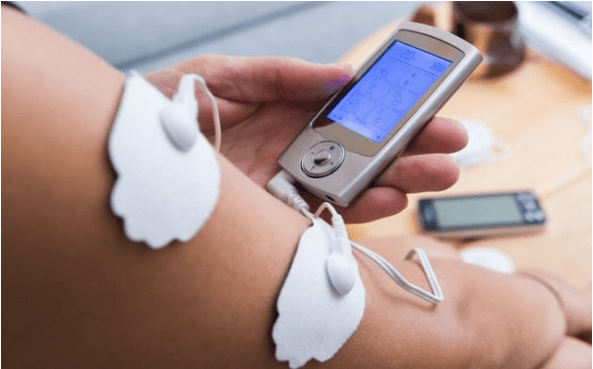
TENS, or Transcutaneous Electrical Nerve Stimulation, has a much more recent history than traditional acupuncture. TENS uses controlled electrical impulses delivered through electrode pads placed on the skin to stimulate underlying nerve fibers.
TENS provides a non-invasive, drug-free approach to pain management. It has been widely used and studied for both acute and chronic pain conditions.
One proposed mechanism of TENS is that electrical stimulation of sensory nerve fibers may influence the transmission and perception of pain signals within the nervous system. TENS may also activate the body's natural pain-modulating mechanisms, including the release of endogenous opioids such as endorphins.
TENS and Acupuncture-Inspired Stimulation
Although TENS and acupuncture are different treatments, certain TENS stimulation patterns can be designed to produce sensations inspired by traditional acupuncture or massage techniques.
Some HealthmateForever®/iSelfCare® devices include Acupuncture Mode or Deep Tissue Massage Mode, depending on the model. These stimulation patterns may produce sensations that users describe as rhythmic, tapping, pulsing, or pressure-like stimulation.
The sensation may resemble aspects of the pressure or stimulation experienced during acupuncture, but TENS does not penetrate the skin with needles and is not the same treatment as acupuncture.
HealthmateForever®/iSelfCare® TENS technology therefore provides a convenient, non-invasive method of electrical stimulation through electrode pads rather than acupuncture needles. It can be used at home and does not require needle insertion.
However, TENS should not be represented as providing exactly the same clinical effects or results as acupuncture. The two approaches use different techniques and mechanisms, and evidence supporting acupuncture does not automatically establish the effectiveness of a TENS device.
HealthmateForever®/iSelfCare® devices combine modern electrical stimulation technology with stimulation patterns inspired by traditional therapeutic concepts, providing users with a drug-free and non-invasive option for personal pain-management and relaxation routines.
Using a TENS unit
How Effective Is TENS for Pain Relief?
Many clinical and scientific studies have examined the use of Transcutaneous Electrical Nerve Stimulation (TENS) for pain management.
In their review of the basic science and clinical efficacy of TENS, Sluka and Walsh (2003) described TENS as a non-invasive treatment that is relatively easy to apply and has relatively few contraindications when used appropriately. TENS has been used by a variety of healthcare professionals as one approach to pain management.
A 1991 study by Johnson, Ashton, and Thompson examined the relationship between patient characteristics, stimulation parameters, and treatment outcomes among long-term users of TENS. The study included 179 patients who completed a questionnaire regarding their age, sex, cause and location of pain, and TENS treatment regimen. Of these patients, 107 were assessed for the electrical characteristics of TENS during self-administered treatment.
The researchers reported that 47% of the patients experienced a reduction in pain of more than half. They also reported that pain relief occurred relatively quickly in many patients, with 75% experiencing onset of relief within 30 minutes and 51% reporting that relief diminished within 30 minutes after stopping stimulation. The study also found that patients used a wide range of stimulation frequencies and treatment schedules.
These findings provide useful evidence regarding how TENS was used and experienced by a group of long-term users. However, individual responses to TENS can vary, and results from one study should not be interpreted as a guarantee that TENS will provide the same degree of pain relief for every person.
Comparing Acupuncture and TENS for Pain Relief
Both acupuncture and TENS have been studied as approaches to pain management, but they are different treatments.
Acupuncture traditionally involves the insertion of fine needles into specific points on the body, while TENS delivers controlled electrical stimulation through electrode pads placed on the skin.
One potential advantage of TENS is convenience. TENS is non-invasive, does not require needles, and compatible portable devices can be used outside of a clinical setting according to the device's instructions. Acupuncture, by contrast, generally involves treatment by a trained practitioner.
However, convenience does not necessarily mean that TENS is more effective than acupuncture for pain relief. The effectiveness of each approach depends on the individual, the type and cause of pain, treatment parameters, and other factors. Direct comparisons between acupuncture and TENS should be based on studies that specifically evaluate the two treatments under comparable conditions.
HealthmateForever®/iSelfCare® TENS devices are designed to provide a convenient, drug-free, non-invasive approach to electrical stimulation and pain management. They should not be represented as a replacement for acupuncture or as clinically superior to acupuncture unless supported by appropriate device-specific evidence.
Acupuncture vs. TENS
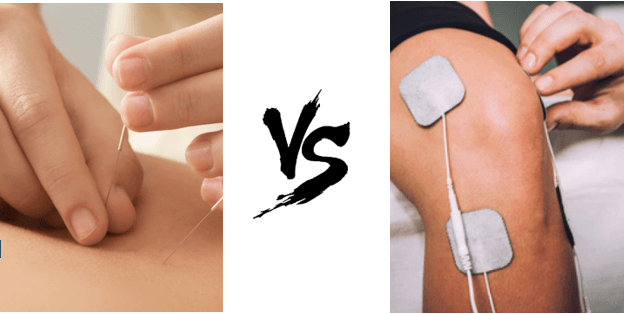
Comparing TENS and Acupuncture for Low-Back Pain
Fox and Melzack conducted a comparative study of acupuncture and transcutaneous electrical stimulation for chronic low-back pain. Twelve patients with chronic low-back pain received both acupuncture and transcutaneous electrical stimulation. The order of the two treatments was balanced, and changes in pain intensity and pain quality were measured using the McGill Pain Questionnaire.
Based on the measure of overall pain intensity, pain relief greater than 33% was reported by 75% of patients following acupuncture and 66% following transcutaneous electrical stimulation. The mean duration of pain relief was approximately 40 hours after acupuncture and 23 hours after electrical stimulation. Although some measures favored acupuncture, statistical analysis did not identify significant differences between the two treatments. The study therefore did not demonstrate a statistically significant difference between acupuncture and transcutaneous electrical stimulation in this small group of patients.
These findings suggest that both acupuncture and TENS may provide pain relief for some people with chronic low-back pain, while offering different practical advantages. TENS is non-invasive, uses electrode pads rather than needles, and can be used at home with an appropriate device and according to its instructions. These characteristics can make TENS a convenient option for people seeking a drug-free approach to pain management.
It is important to note that this study involved only 12 patients and specifically evaluated chronic low-back pain. Its results should not be interpreted as proof that TENS and acupuncture are equally effective for every type of pain or for every individual. More recent evidence regarding TENS for chronic low-back pain is mixed, underscoring the importance of considering the condition, treatment parameters, and individual response.
Conclusion
Acupuncture is a traditional medical practice with a history spanning thousands of years and has been studied for pain management and other health conditions. TENS represents a modern, non-invasive approach to electrical stimulation that can provide an alternative way to manage certain types of pain without needles or medication.
The Fox and Melzack study provides an early example of research directly comparing acupuncture and transcutaneous electrical stimulation for chronic low-back pain. While the study did not demonstrate a statistically significant difference between the two treatments, it provides useful historical evidence regarding the potential of electrical stimulation as an alternative approach to pain management.
Today, TENS is used as a drug-free, non-invasive approach to pain management for certain types of pain. Its portability and ease of use may make it a convenient option for people who prefer an at-home approach. However, individual responses vary, and TENS should not be presented as universally more effective than acupuncture or as a replacement for professional medical care.
References
Fox, E. J., & Melzack, R. (1976). Transcutaneous electrical stimulation and acupuncture: Comparison of treatment for low-back pain. Pain, 2(2), 141–148.
Sluka, K. A., & Walsh, D. (2003). Transcutaneous electrical nerve stimulation: Basic science mechanisms and clinical effectiveness. The Journal of Pain.
Johnson, M. I., Ashton, C. H., & Thompson, J. W. (1991). An in-depth study of long-term users of transcutaneous electrical nerve stimulation (TENS). Implications for clinical use of TENS. Pain, 44(3), 221–229.
Ulett, G. A., Han, S., & Han, J. S. (1998). Traditional and evidence-based acupuncture: History, mechanisms, and present status. Southern Medical Journal.
National Center for Complementary and Integrative Health (NCCIH). Traditional Chinese Medicine: In Depth.
Schoenbart, B., & Shefi, E. (2014). Traditional Chinese Medicine Acupuncture. HowStuffWorks.